Claude Code - Igniting New Innovation in Developer Workflows
The latest Tasks release for Anthropics Claude Code marks a significant evolution in how developers approach workflow automation. With this update, Claude...
By Justin
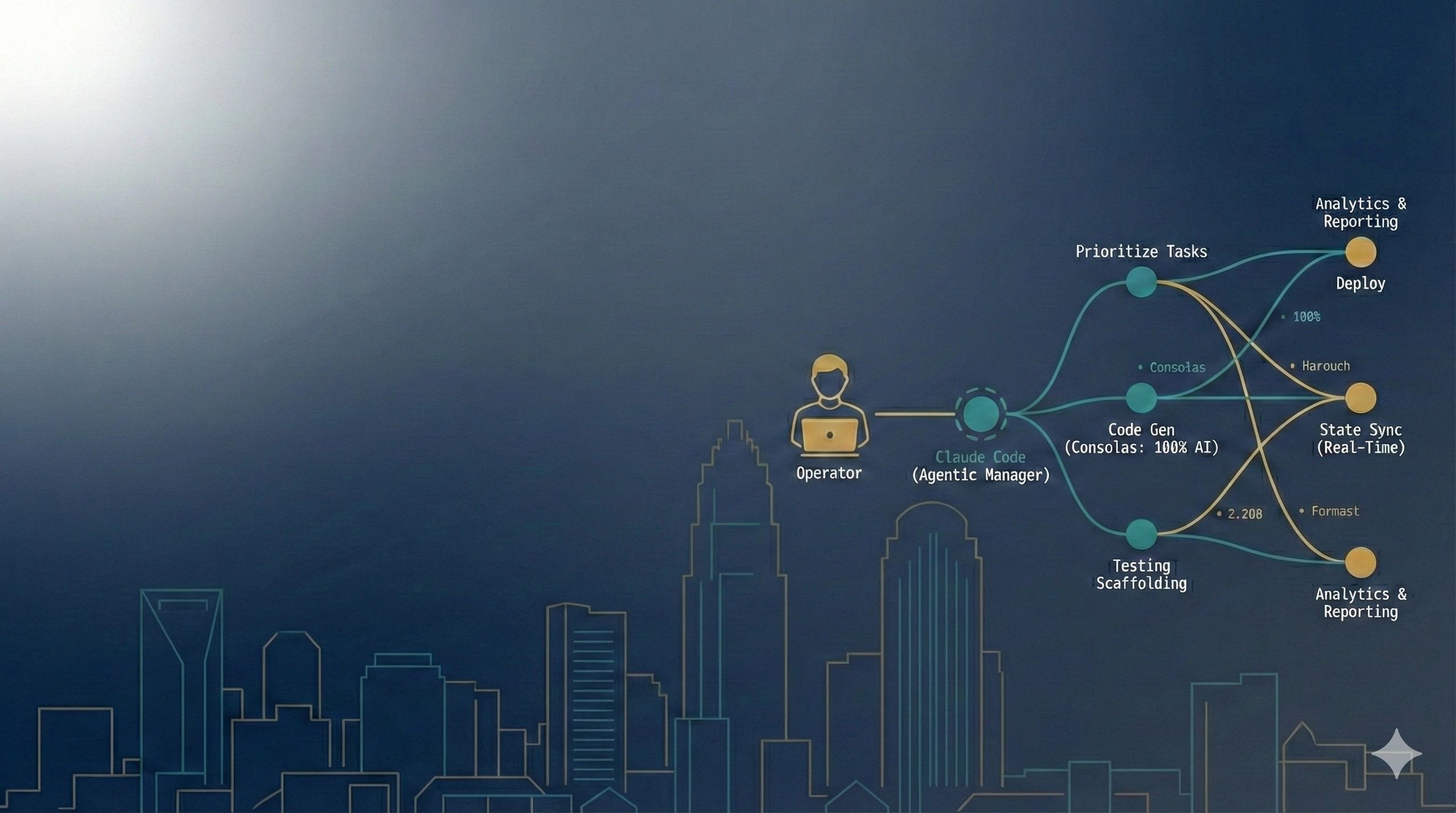
The latest Tasks release for Anthropic’s Claude Code marks a significant evolution in how developers approach workflow automation. With this update, Claude Code shifts from ephemeral “to-dos” to persistent, coordinated work units that align closer with real engineering practices, essentially acting as an agentic project manager inside your development pipeline.
According to internal sources and developer reports, this release transforms Claude Code from a reactive coding assistant into a state-aware system capable of managing complex, multi-step tasks over time, a shift that “makes long-horizon work possible without constant supervision.”
Supporters of the release have emphasized its real-world impact. Boris Cherny, who helped build Claude Code, told a tech publication that he hasn’t typed a single line of code by hand in months, yet still ships hundreds of pull requests because the agentic tools handle the heavy lifting. “Not 80%. Not ‘most of it.’ One hundred percent,” Cherny said of the code generated via AI.
Key benefits you can expect include:
- Increased productivity: Persistent task tracking means less time lost reconstructing context.
- Clear task delegation: Teams can offload planning and execution even when distributed globally.
- Seamless collaboration: Shared persistent state lets agents and human developers work in lockstep.
This update isn’t just incremental, it’s part of a broader philosophy shift at Anthropic to view AI not merely as a suggestion engine, but as a co-author, co-planner, and co-contributor in engineering workflows.
7 Features That Supercharge Workflow Efficiency
- Smart Task Prioritization: Claude Code now dynamically ranks tasks based on urgency, dependencies, and context... meaning it understands project demand flows rather than just responding to prompts. This is a structural change from “to-dos” to Tasks with explicit dependencies.
- Seamless Real-Time Collaboration: The Tasks framework supports persistent, synchronized states across sessions, so agents can pick up where they left off and update shared task lists automatically.
- Agile Dependency Mapping: Claude’s Tasks aren’t just lists. They can have contextual links, enabling the agent to infer causality and sequence work without human choreography.
- Customizable Notifications and Alerts: Teams can configure thresholds so that task status changes trigger contextual alerts, reducing noise and focusing attention where it matters most.
- In-Depth Analytics and Reporting: While Anthropic hasn’t published an official dashboard yet, third-party reporting suggests teams using task orchestration see dramatic reductions in idle time and better planning visibility.
- Automated Code Suggestions: Leveraging agentic capabilities, Claude proposes meaningful implementations and test scaffolding as part of Tasks, rather than as one-off suggestions.
- Streamlined DevOps Integration: The Tasks primitives can be integrated into CI/CD pipelines, linking automated planning and execution with build, test, and deployment cycles.
Elevating Efficiency: Streamlined Processes for Developer Teams
Developer teams that adopt Claude Code’s Task release report that mundane operational overhead drops sharply. With persistent task state and dependency tracking, the system automates routine orchestration in ways that rival dedicated project management systems, but inside the coding environment itself.
Key advantages include:
- Optimized workflows that reduce context switching.
- Enhanced collaboration around both code and task state.
- Faster delivery cycles via AI-assisted process continuity.
This modernization resonates especially in fast-iterating hubs and globally distributed engineering teams where synchronous coordination pain is costly.
The principle behind the update is simple: shift intelligence and memory into the workflow itself rather than expecting developers to remember every step manually, and that’s a philosophical departure from earlier coding assistants.
Harnessing Innovation: A Comparative Look at Task Release Features
Unlike traditional task managers that require human input at every step, Claude Code’s approach is adaptive and context-aware. Tasks are built to persist, evolve, and self-coordinate, making them more than simple checklists. They function as active agents in the development lifecycle.
Key differentiators include:
- Dynamic Task Allocation: Based on real-time project context, reducing bottlenecks.
- Integrated Collaboration: Shared tasks mean no more manual handoffs.
- Modular Flexibility: Workflow components can be composed based on task complexity.
- Scalable Implementation: Adaptable for large teams and agile environments alike.
This is why industry observers refer to motion like this as the next frontier in AI tooling, where agents aren’t just assistants but participants in the development workflow.
Frequently Asked Questions About Task Release Implementation
What exactly is Claude Code’s task release?
It’s an upgrade that replaces the old ephemeral “to-do” system with persistent Tasks, enabling long-running, interdependent goals that carry context across sessions.
How does it boost developer efficiency?
By retaining state, managing dependencies, and automating orchestration steps, developers spend less time on coordination and context recovery.
What implementation challenges should developers expect?
As with any agentic system, legacy tooling might need adapters or connectors, proper planning and incremental rollout strategies are recommended.
How can teams integrate it into their workflows?
Begin by mapping current bottlenecks, align Claude Code’s Tasks primitives with existing pipelines, and educate teams on expectations around AI-assisted planning and execution.
What best practices maximize impact?
Embrace iterative integration, monitor task performance metrics, and foster feedback loops that balance human oversight with AI autonomy.
Wrapping Up: Empowering Developers Through Strategic Task Releases
The Claude Code Tasks release represents a shift toward agentic coding, where AI doesn’t just generate code, it manages and orchestrates work over time. By embracing persistent, contextual tasks, engineering teams unlock new levels of efficiency and collaboration.
Takeaways include:
- Improved workflow integration within development toolchains.
- Enhanced collaboration via shared task awareness.
- Scale-ready solutions that grow with increasingly complex projects.
In an environment where speed, accuracy, and cohesion matter, this evolution positions teams to focus less on operational friction and more on strategic problem solving, a transformation that practitioners across the industry are beginning to recognize as foundational to next-generation software delivery.
Learn More:
The Claude Code creator says AI writes 100% of his code now
Boris Cherny’s private lesson on Claude Cowork reveals how Anthropic’s builders actually work, and what it means for the rest of us
Claude Code's 'Tasks' update lets agents work longer and coordinate across sessions
One of the biggest constraints currently facing AI builders who want to deploy agents in service of their individual or enterprise goals is the "working memory" required to manage complex, multi-stage engineering projects.
Claude Code: Anthropic’s wildly popular AI coding app
ChatGPT may be the best-known artificial intelligence chatbot on the market, but the latest iteration of AI startup Anthropic’s coding bot, Claude Code, is newly entering the spotlight. By simplifying the process of writing code, the tool hints at a more democratized digital era.
Related Solutions
Get the AI Team Playbook
10 practical AI tools your team can start using today — automations, custom GPTs, AI agents, and prompt frameworks that actually save time.
Want to put this into practice?
Book a 30-minute call. We'll talk through how this applies to your business and where the biggest opportunities are.
Book a Discovery CallRelated Insights
Thought Leadership
We Built a Swarm Before We Sold One
Queen City AI built its own agent swarm before offering to build anyone else's. Here is what we learned, and why we are ready to build yours.
Read insightThought Leadership
Why Most Nonprofits Are Getting Agentic AI Wrong
92 percent of nonprofits use AI. Only 1.2 percent deploy AI agents. The gap between adoption and impact is growing, and most organizations are skipping the foundational work that makes agentic AI useful.
Read insightThought Leadership
Queen City AI Launches Donorsignal.org
We launched DonorSignal.org to help nonprofits fix their fundraising infrastructure, clean up their systems, and get time back for the work that matters.
Read insight